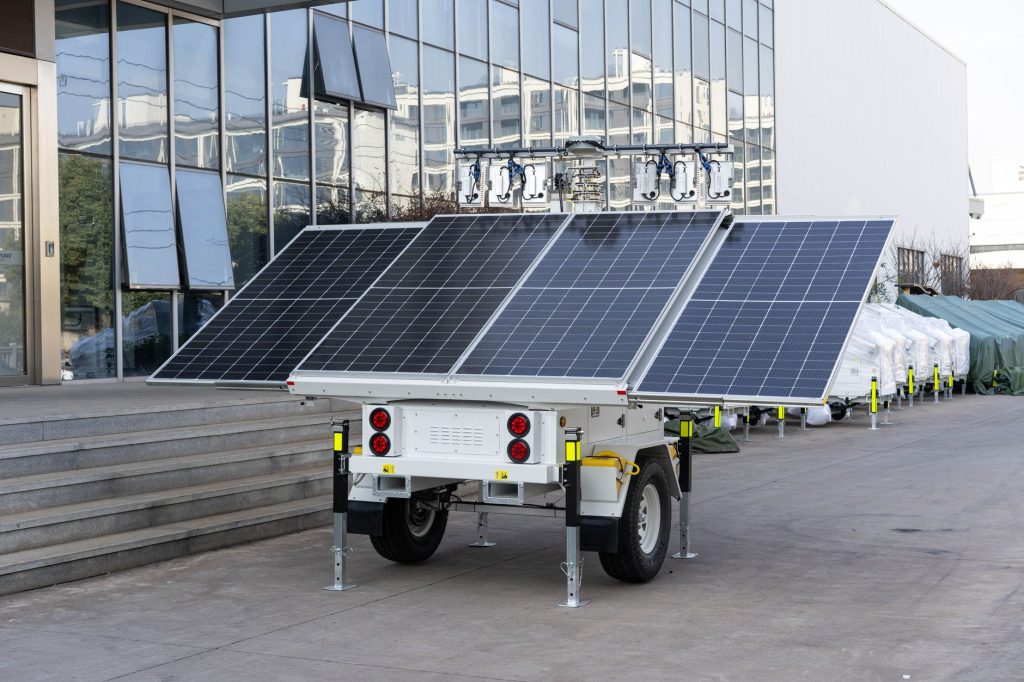
Even in 2026, the Bluetti AC300 and B300 combination remains a significant contender in the solar generator market, particularly for its highly modular approach. This comprehensive review examines the AC300’s capabilities alongside the B300 battery modules, exploring its power output, expandability, and overall value. Readers will find detailed insights to help determine if this modular power station meets their specific energy needs and investment expectations.
 Best Value
 Premium Pick
What the AC300 + B300 Actually Is (And Why Modularity Matters)
The Bluetti AC300 + B300 has earned a genuine reputation as one of the most flexible home-backup solar generators on the market — not because of marketing language, but because its core architecture delivers something most fixed-capacity units cannot: the ability to scale storage as your needs grow. The AC300 is a 3,000 W pure sine wave inverter base unit with no built-in battery. Every watt-hour of capacity comes from external B300 battery modules, and you can stack up to four of them for a total of 12,288 Wh of usable storage. That design decision — separating the inverter from the battery — is what makes this system genuinely modular rather than just marketably so.
For context on where this fits in Bluetti’s broader lineup, see our breakdown of best solar generators for home backup and our comparison of portable power station buying guide.
Core Specs: What the Verified Data Shows
- Inverter output: 3,000 W continuous, pure sine wave
- Max solar input: 2,400 W — among the highest in its class
- Expandable capacity: Up to 12,288 Wh with four B300 modules (standard configuration); the B300K variant starts at approximately 2,764.8 Wh and scales to around 11,059.2 Wh in Bluetti’s own product documentation
- Battery chemistry: LiFePO4 (LFP) — a safer, longer-cycle chemistry than older NMC designs
- UPS functionality: Listed on Bluetti’s product page as a supported feature
- Dual charging: Solar and AC input can run simultaneously per Bluetti’s product materials
The 2,400 W solar input ceiling is a meaningful spec. At that level, a well-designed panel array can meaningfully recharge even a fully depleted B300 stack within a reasonable solar day — a real advantage during extended grid outages. The 3,000 W continuous output covers most household circuits: refrigerators, window AC units, power tools, medical devices, and lighting loads simultaneously, though it will not run a central HVAC system or electric dryer on its own.
How It Compares to Other Bluetti Platforms in 2025
Bluetti has expanded its modular lineup significantly, and honest buyers should understand where the AC300 + B300 sits relative to newer options.
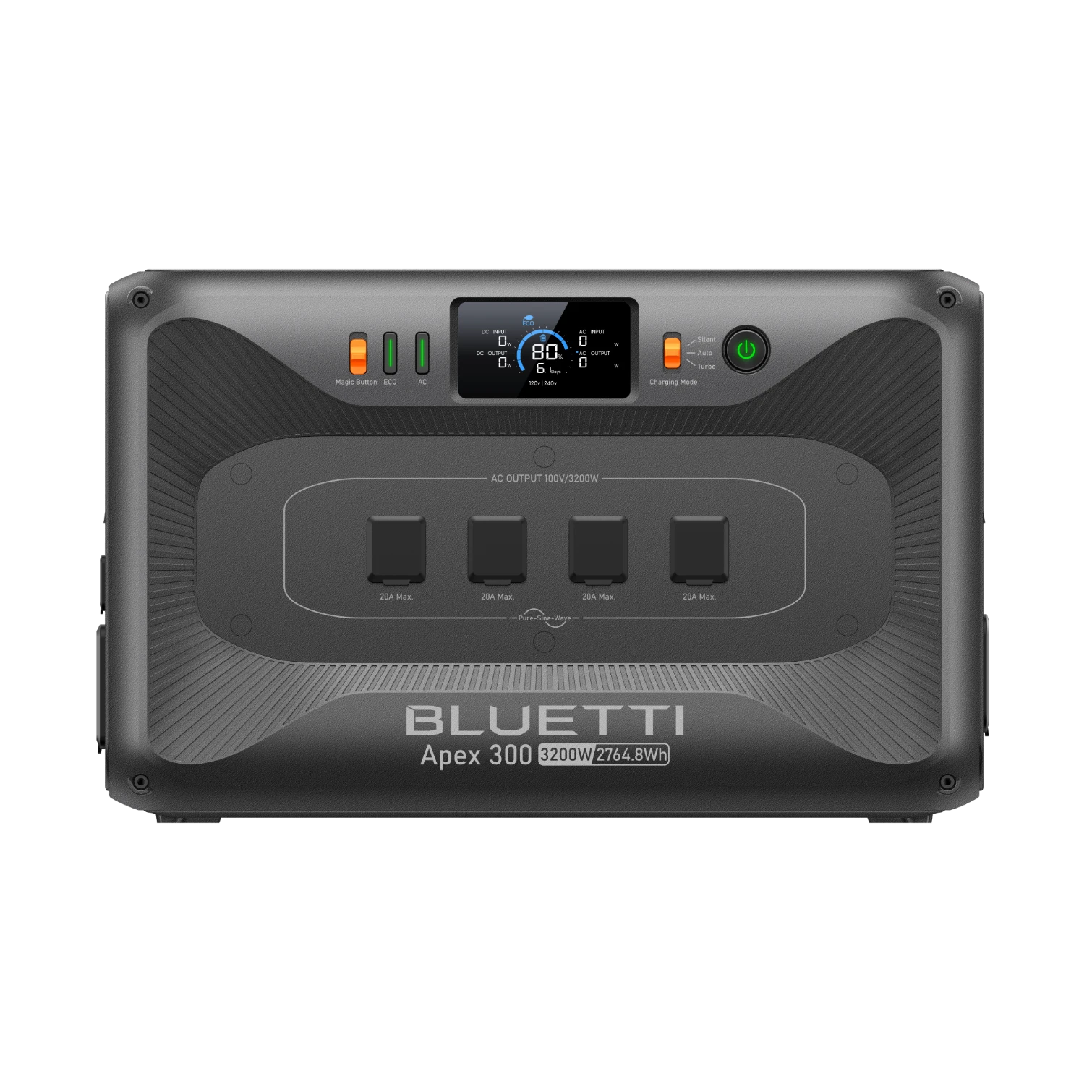
- Bluetti Apex 300: A newer modular platform with a 2,765 Wh base, 3,000 W output, hot-swappable battery design, simultaneous 120 V + 240 V capability, and expansion up to 19.3 kWh with six add-on packs. Pro Tool Reviews highlights 6,000 cycle life to 80% capacity and Bluetti’s stated 17-year lifespan claim. If dual-voltage support or hot-swapping is a priority, the Apex 300 is a more current architecture.
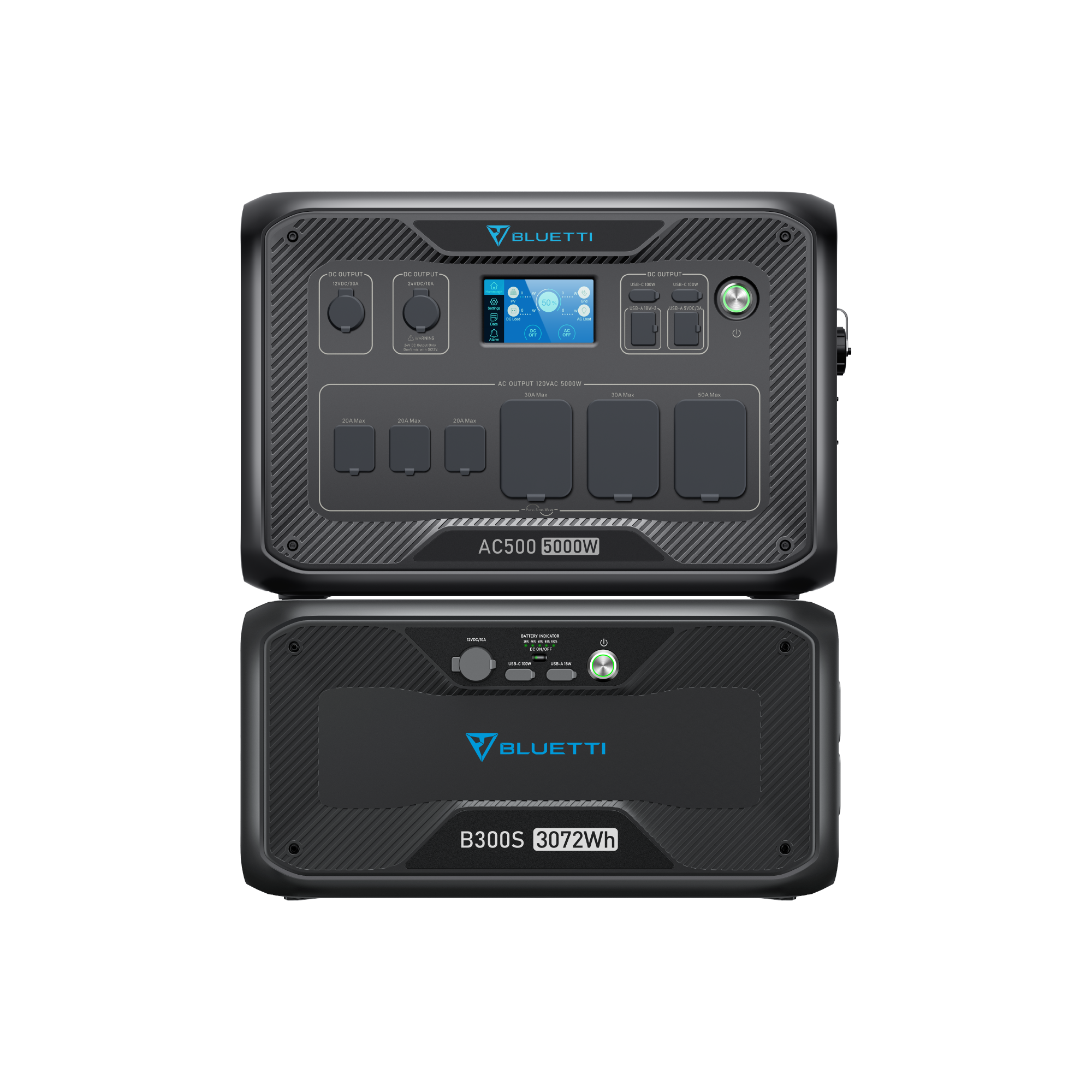
- Bluetti AC500 + B300S: Steps up to 5,000 W continuous output and up to 18,432 Wh with six B300S modules. Two AC500 units can be chained for 240 V split-phase operation — relevant for whole-home backup or powering 240 V appliances directly. This is the right tier for larger homes or workshop use.
- Bluetti AC200MAX: The entry point into Bluetti’s expandable ecosystem — 2,200 W continuous output, 2,048 Wh base capacity, expandable with B230 or B300 batteries. Better suited to apartment dwellers, van builds, or light backup needs than the AC300.
The AC300 + B300 occupies a well-established middle ground: more power and storage potential than the AC200MAX, lower cost and complexity than the AC500, and a mature platform with a documented owner track record. The Apex 300 is newer and architecturally more advanced, but also less field-tested at scale as of this writing.
Real Owner Feedback: The Honest Picture
Reviewer and owner consensus on the AC300 + B300 breaks down predictably along two lines.
What owners consistently value:
- The modular design genuinely delivers — buyers report starting with one B300 and adding capacity later without replacing the inverter unit
- LFP chemistry earns consistent praise for thermal stability and long-term cycle durability compared to older lithium-ion designs
- The 3,000 W output class handles real household appliance loads that lower-wattage units cannot
Where the platform draws legitimate criticism:
- Quality-control complaints surface in owner reviews, particularly around AC charging failures and solar input faults — not isolated incidents but a pattern flagged by the SunHub review aggregation
- Customer service response times are a recurring sore point, with some owners reporting resolution delays stretching to weeks or months
- Weight and portability are real limitations — the AC300 base unit and each B300 module are heavy, and the system is better described as a relocatable stationary backup than a portable generator
- App and firmware reliability draws complaints; some users report connectivity issues that affect monitoring and control features
These are not dealbreakers for the right buyer, but they are genuine tradeoffs that a fair review must name. If you need a plug-and-play unit with minimal configuration and strong warranty service, the ownership experience here has more friction than the marketing suggests.
Pricing Transparency
Current U.S. street pricing for the AC300 + B300 combination is not reliably confirmed in our verified sources at the time of this writing, and we will not fabricate a number. Prices for modular solar generators in this output class have historically ranged widely depending on sales cycles, bundle configurations, and retail channel. We recommend checking Bluetti’s direct site, authorized dealers, and major retailers simultaneously — Bluetti runs promotional pricing periodically, and the gap between list price and sale price on this platform can be substantial. For context on how solar generator pricing compares across the category, see our solar generator price comparison guide.
Who Should Buy the AC300 + B300 in 2025
The AC300 + B300 is the right choice for buyers who want a proven, high-capacity modular backup system and are willing to accept some product maturity tradeoffs. It is particularly well-suited to:
- Homeowners who want to start with one battery module and expand storage over time without replacing the inverter
- Users with a high-wattage appliance mix who need a genuine 3,000 W continuous load capacity
- Buyers prioritizing LFP chemistry’s safety profile and long cycle life over raw portability
- Solar setups where maximizing panel input (up to 2,400 W) is a priority
It is not the best fit for buyers who need hot-swappable batteries, 240 V native output, or the highest possible expansion ceiling — the newer Apex 300 addresses the first two, and the AC500 addresses the third. It is also not well-suited to buyers who need a truly portable unit or who have limited tolerance for firmware and customer-service friction.
Bottom line: The AC300 + B300 remains one of the most capable and field-validated modular solar generators in its output class. Its core architecture is sound, its LFP chemistry is a genuine long-term advantage, and its 2,400 W solar input is hard to match at this power tier. The real tradeoffs — QC inconsistency, heavy weight, and service delays — are documented and real. Buy it for what it demonstrably does well; go in with clear eyes about where ownership friction exists.
Sources
- SunHub – Bluetti Solar Generator Review Guide
- Pro Tool Reviews – Bluetti Apex 300 Power Station
- Solar Power Genius – Bluetti Blog
- Bluetti Official – AC300 + B300K Product Page
- Bluetti Australia – Can a Solar Generator Power a House?
Disclosure: This article was produced with AI-assisted research and editorial review. VoltVentureLab.com may earn a commission from affiliate links at no additional cost to you.