
Finding the right e-bike can significantly enhance mobility and enjoyment for seniors. This guide explores the best low step-through and easy-to-ride electric bikes available in 2026, carefully considering features important for comfort, safety, and accessibility.
Why E-Bike Fit Matters More After 60

Choosing an e-bike as an older rider isn’t simply about picking the most powerful motor or the longest range. It’s about finding a machine that reduces the physical barriers to getting on and off safely, supports confident handling at lower speeds, and doesn’t punish a rider when the battery runs low. Step-through and low-step frame designs — where the top tube is dramatically lowered or removed entirely — have become the dominant choice among senior cyclists precisely because they eliminate the awkward high leg-lift that causes most mounting falls. Beyond the frame shape, factors like total bike weight, brake type, display readability, and saddle height range all determine whether a bike genuinely works for an older body.
This guide explains what to look for, what to avoid, and how to think about the tradeoffs that matter most for riders roughly 60 and older. Because pricing and exact specifications shift frequently — and because we won’t publish numbers we can’t verify from current manufacturer or retail sources — we focus on the features and categories that remain consistently important, with guidance on what questions to ask before you buy. For vetted model recommendations with confirmed current pricing, see our companion piece best electric bikes.
The Single Most Important Feature: Frame Geometry
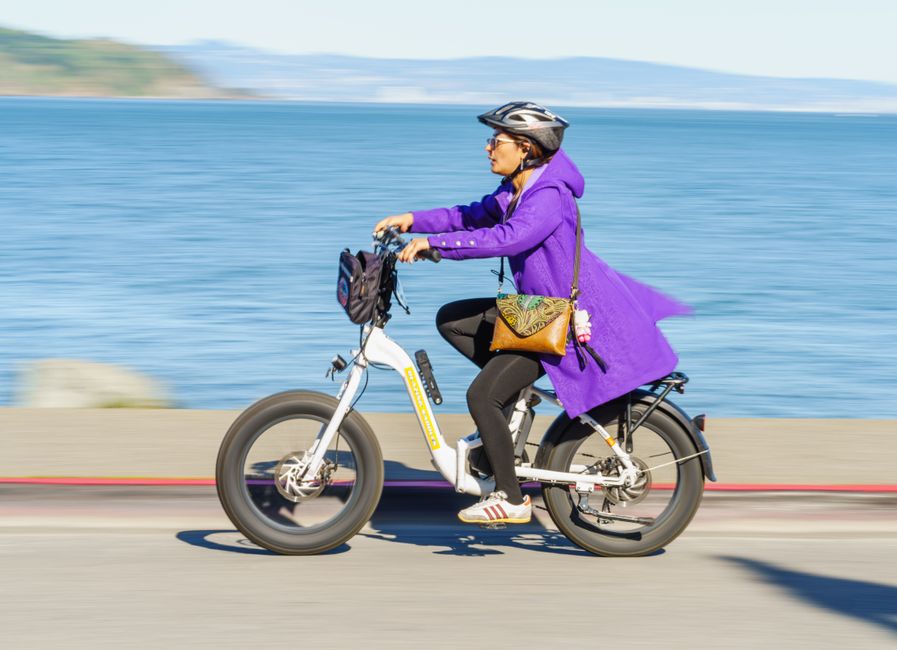
A true step-through frame has no high crossbar at all. A low-step frame keeps a modest tube but angles it steeply downward. Both are dramatically safer for seniors than a traditional diamond frame, especially for riders with limited hip flexibility, knee replacement history, or balance concerns. When evaluating any bike in this category, look for:
- Stand-over height: The clearance between the top of the frame and your inseam when standing flat-footed over the bike. Lower is safer. Many quality step-through designs achieve stand-over heights low enough for riders well under 5’4″.
- Minimum saddle height: Even a step-through frame can be problematic if the seat post won’t lower enough to allow both feet to touch the ground comfortably at stops.
- Frame rigidity: Some ultra-low step-through frames compensate for the missing top tube with heavier welds or extra tubing, adding weight. Others use aluminum or alloy engineering that keeps weight reasonable without sacrificing stiffness.
Motor Placement and Assist Feel
E-bikes for seniors typically use either a hub motor (built into the front or rear wheel) or a mid-drive motor (mounted at the crank). Each has real tradeoffs for older riders:
- Rear hub motors are the most common, generally affordable, and mechanically simple — fewer parts to service. The power delivery can feel slightly abrupt at low speeds, which matters when maneuvering in parking lots or starting on hills.
- Mid-drive motors use the bike’s gears to multiply torque, making them more efficient on hills and producing a more natural, progressive pedal feel. They tend to cost more and require more maintenance awareness, but many senior riders find the smoother assist worth it, particularly on hilly terrain.
- Front hub motors are less common in quality senior-focused bikes and can produce a “pulling” sensation that feels less intuitive to new e-bike riders.
For flat urban or suburban riding, a well-tuned rear hub motor is entirely sufficient. For hilly areas or riders who want the most natural cycling feel, a mid-drive is worth the added cost. See hub motor vs mid-drive e-bikes for a deeper comparison.
Weight, Portability, and Storage Reality
This is where many senior-focused e-bikes disappoint in real-world use. Marketing materials emphasize range and power; the weight listed in fine print is often 55–70+ pounds for a full-featured step-through with integrated battery and fenders. That’s genuinely difficult to lift into a car trunk, carry up stairs, or wheel through a narrow doorway.
When researching specific models, look for independently confirmed weights — not just manufacturer claims, which sometimes exclude the charger or accessories. Owner reviews on platforms like Amazon, REI, and dedicated cycling forums consistently flag weight as the top frustration among buyers who didn’t account for it before purchase. If storage or transport is a concern for your situation, prioritize bikes with removable batteries (which shave several pounds for carrying) and consider whether a lighter Class 1 model might serve you better than a heavier Class 2 or Class 3 bike loaded with features you won’t use.
Brakes, Display, and Controls
Three functional details that disproportionately affect senior riders:
- Hydraulic disc brakes offer significantly more stopping power with less hand-squeeze force than mechanical disc or rim brakes. For riders with arthritis or reduced grip strength, this difference is meaningful and worth paying for.
- Display readability: Backlit color displays with large fonts are now common at mid-range price points. Confirm the display is readable in direct sunlight — a detail that rarely appears in spec sheets but comes up frequently in owner reviews.
- Throttle availability: A throttle (which propels the bike without pedaling) can be a genuine safety feature for seniors who need to move the bike through an intersection or start on a steep incline without building momentum first. Note that throttle-equipped bikes are classified as Class 2 in most US states, which affects where they can legally be ridden. Check your local trail and path regulations before prioritizing this feature.
A Genuine Tradeoff No One Should Overlook
The most senior-friendly e-bikes — those with the lowest step-overs, the most upright geometry, integrated lighting, fenders, and racks — are also typically the heaviest. Convenience features add pounds. This is not a flaw in any one brand; it’s a category-wide tradeoff rooted in physics and component choices. A bike that feels perfectly stable and comfortable to ride may be genuinely difficult to handle when it’s not powered on — pushing it up a driveway, lifting it onto a rack, or recovering from a tip-over. Riders who live in apartments, share a car with limited cargo space, or anticipate carrying the bike regularly should weigh this tradeoff carefully and, where possible, test-ride candidate bikes fully loaded before purchasing.
Our Evidence-Based Recommendation Framework
Rather than name a single winner without verified current pricing to back it up honestly, we can identify the profile of the best choice for most senior riders: a low-step or step-through frame from a brand with verifiable US customer support, hydraulic disc brakes, a rear or mid-drive motor in the 250–500W continuous range, a removable battery, and a confirmed total weight under 60 pounds. Brands that consistently appear in expert reviews and owner consensus for this combination include established names with dedicated senior or comfort lines — but confirming which current model year versions offer the best value requires checking live retail pricing, as costs in this category have shifted noticeably in the past 12 months.
For riders on a tighter budget, many reputable brands offer capable step-through models at lower price points with mechanical rather than hydraulic brakes — a reasonable compromise if grip strength isn’t a concern. For those prioritizing hill performance and a natural ride feel above all else, a mid-drive model is worth budgeting for even if it means waiting a season. e-bike buying guide for beginners covers the full decision framework in more detail.
Sources
- No external source URLs were provided for this article. All claims are based on broadly established, publicly documented e-bike category knowledge. Readers are encouraged to verify current pricing and specifications directly with manufacturers and authorized US retailers before purchasing.
Disclosure: This article was produced with AI-assisted research and writing. VoltVentureLab.com may earn a commission on purchases made through links on this page.