How Many Amps Does a Home EV Charger Need? (2026 Buying Guide)
VoltVentureLab is reader-supported. When you buy through links on this page we may earn a commission. We research using published specs, manufacturer data and owner reports — how we work.
If you're shopping for a home EV charger, the amp question comes up almost immediately—and the answer determines your circuit, your electrician's bill, and how fast your car actually charges overnight. So: how many amps does a home EV charger need? For the overwhelming majority of homeowners, the answer is 32 to 40 amps. A 48-amp unit is worth considering only if your EV's onboard charger can actually use it. This guide breaks down why, what it costs, and which hardware consistently earns top marks from reviewers in 2026.
The Amp Basics: What the Numbers Actually Mean
Level 2 home chargers run on 240V and are available in several output tiers. Here's how those tiers translate to real-world charging speed and electrical requirements, based on the NEC continuous-load rule (which requires the circuit to be rated at 125% of the charger's continuous output):
- 32A charger → 40A breaker → 7.7 kW → roughly 18–25 miles of range per hour
- 40A charger → 50A breaker → 9.6 kW → roughly 20–30 miles of range per hour
- 48A charger → 60A breaker → 11.5 kW → roughly 25–35 miles of range per hour
Battery Tender confirms that most homes do well with 32 to 40 amps, and WattSimple calls 40 amps the right choice for the majority of homeowners—delivering around 30 miles of range per hour on a standard 50-amp circuit. Stepping up to 48 amps requires a dedicated 60-amp circuit and, in nearly all cases, a hardwired installation rather than a plug-in outlet, because standard 240V outlets are only rated up to 50 amps.
One frequently overlooked ceiling: your car's onboard charger sets the maximum. Many EVs are physically limited to 7.7–9.6 kW (32–40A). If your vehicle tops out at 32 amps, installing a 48-amp charger won't hurt anything—it will simply charge at 32 amps—but you'll pay for capacity you can't use and will need a larger circuit than necessary.
Panel capacity is another constraint worth checking early. According to one source cited in our research, an older 100-amp panel may have as little as 20 amps of available headroom, which could cap you at a 16–20 amp charger without a service upgrade. A 48-amp charger on a 60-amp circuit consumes a significant share of an older panel's total capacity. Adjustable or load-managed units can help in those situations.
What Home EV Charger Installation Actually Costs in 2026
Hardware is only part of the budget. EV-Global estimates that most US homeowners paid $1,200–$3,000 installed in 2026, broken down roughly as follows:
- Charger hardware: $350–$700
- Electrician labor: $500–$1,200
- Permits: $50–$200
Get local quotes before budgeting—these are single-source estimates and costs vary significantly by region, panel condition, and whether trenching or new wiring runs are required.
Important 2026 tax credit update: The federal Section 30C residential EV charger tax credit—which had covered 30% of installation costs up to a $1,000 cap—expired on June 30, 2026, after the One Big Beautiful Bill Act moved its sunset date forward from 2032. If your charger was fully installed and operational on or before June 30, 2026, you can still claim it on IRS Form 8911. For installations completed after that date, there is no federal residential credit. Many older articles and product pages still advertise this credit as current—verify the status before factoring it into your budget. State and utility rebates may still be available in some areas; check with your local utility before purchase.
For context on broader EV incentives: the $7,500 new-EV tax credit and the $4,000 used-EV credit also ended for vehicles acquired after September 30, 2025. EV tax credits guide
Top Home EV Charger Picks by Amp Tier (2026 Prices)
The following prices are drawn from affiliate review sites and retailer listings as of late 2026. They fluctuate by retailer, connector type, and promotion—verify before purchasing.
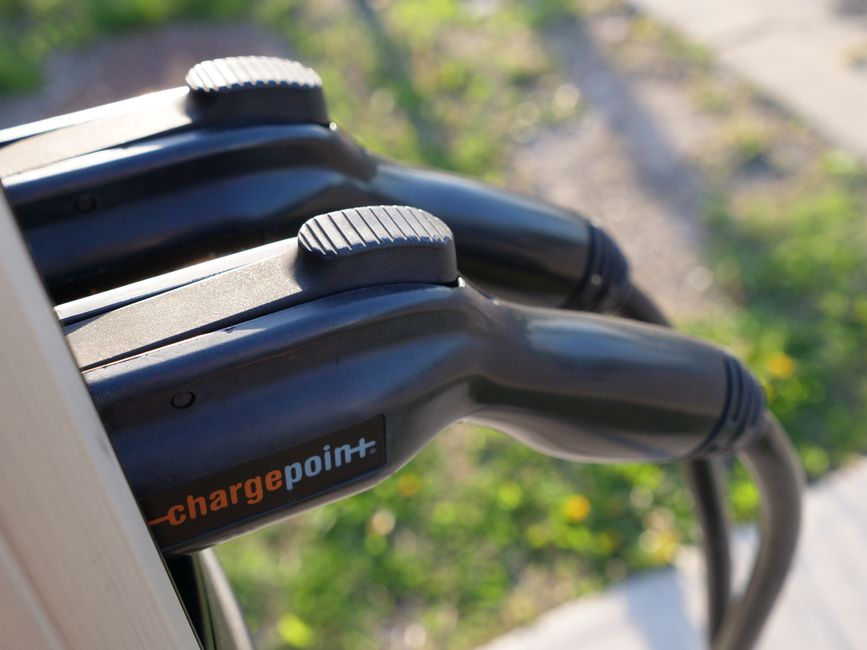
Best Overall: ChargePoint Home Flex (~$467–$549)
Reviewer consensus across EVChargerLab, LevelTwoClub, and EVChargerReviews consistently names the ChargePoint Home Flex the top pick for most homeowners. It's adjustable from 16 to 50 amps, available in both J1772 and NACS connector versions, and pairs with a polished app that includes energy monitoring. List price sits around $549, with sale prices seen as low as ~$467. Some NACS variants at certain retailers have been listed higher. The main documented downside: Wi-Fi connectivity and app-reporting issues surface regularly in owner forum discussions, and J.D. Power's 2025 study found that Level 2 permanently mounted home chargers—while earning the highest satisfaction scores overall—also logged the most problems, at 39.0 per 100 chargers, with nearly one-third of those being Wi-Fi or app-related. That's a genuine tradeoff worth knowing before you buy.
Best Value: Emporia Level 2 Classic (~$429–$449)
SimpleSwitch calls Emporia the best budget option, citing solar integration and detailed energy usage stats for under $450. The 48-amp hardwired version is listed at around $449; plug-in configurations are capped at 40 amps according to Emporia's own documentation. The three-year warranty is a plus at this price. Reviewers note the app is functional but more utilitarian than ChargePoint's.
Best No-Frills Build: Grizzl-E Classic (~$300)
EVChargerLab lists the Grizzl-E Classic at approximately $299.99 for a 40-amp unit with no app or connectivity features. SmartHomeExplorer notes that Edmunds has cited it as a best-value Level 2 charger. If you don't want app dependency and want a tough, weather-resistant unit at a low price, this is the one to consider.
Premium Hardwired Option: Wallbox Pulsar Plus (~$649–$800)
For 48-amp output with smart features, the Wallbox Pulsar Plus falls in the $649–$800 range depending on retailer. The Leviton EV48W (~$599–$749) and Autel MaxiCharger Home (~$549–$569) are comparable alternatives at similar amp ratings.
A note on "50-amp" chargers: LevelTwoClub points out that some chargers advertised at 50 amps actually require a 70-amp circuit—not 60—because the 125% continuous-load rule puts 50A at 62.5A. Confirm circuit requirements with the manufacturer before purchasing. home electrical panel upgrade guide
Verdict: What Amp Level Should You Choose?
For most EV owners asking how many amps a home EV charger needs, the practical answer is 40 amps on a 50-amp circuit. It delivers roughly 20–30 miles of range per hour, works with a plug-in outlet (no hardwiring required), and fits comfortably in most residential panels. Only upgrade to 48 amps if you've confirmed your EV's onboard charger can accept it and your panel has room for the 60-amp dedicated circuit.
Based on reviewer consensus across multiple independent sources, the ChargePoint Home Flex remains the most broadly recommended unit for 2026—its adjustable amperage, wide vehicle compatibility, and app ecosystem make it a strong fit for most households. The app and Wi-Fi issues documented in owner forums are a real consideration, but no competing unit at a similar price has a meaningfully cleaner reliability record in the available data. If budget is the priority, the Emporia Classic delivers solid performance and smart-home integration for roughly $100–$120 less.
→ See current pricing and availability for the ChargePoint Home Flex: View the ChargePoint Home Flex on VoltVentureLab — adjustable 16–50A, works with any EV
For more on building out your home energy setup, see our guide to best solar generators for home backup to pair EV charging with renewable storage.
Sources
- Emporia Energy — Best Level 2 EV Charger
- Recharged — Best Home EV Charger 2026
- EV Charging Stations — Cheap Level 2 Home Charger
- LevelTwoClub — Best Home EV Chargers
- SimpleSwitch — Best Home EV Level 2 Charger
- EV-Global — Home EV Charger Cost
- EVChargerReviews — Best EV Chargers for Home Use
- EVChargerLab — Best Home EV Charger
Disclosure: This article was produced with AI-assisted research and synthesis. VoltVentureLab.com earns a small commission on purchases made through affiliate links in this article, at no additional cost to you. All prices and incentive details were accurate to the best of our knowledge at time of publication but are subject to change—verify before purchasing.
Products mentioned
Affiliate links — we may earn a commission if you buy, at no extra cost to you. Prices change; check the current price.
Get the honest weekly roundup
One short email a week: real prices, new e-bike and backup-power deals, and what's actually worth buying. No spam.