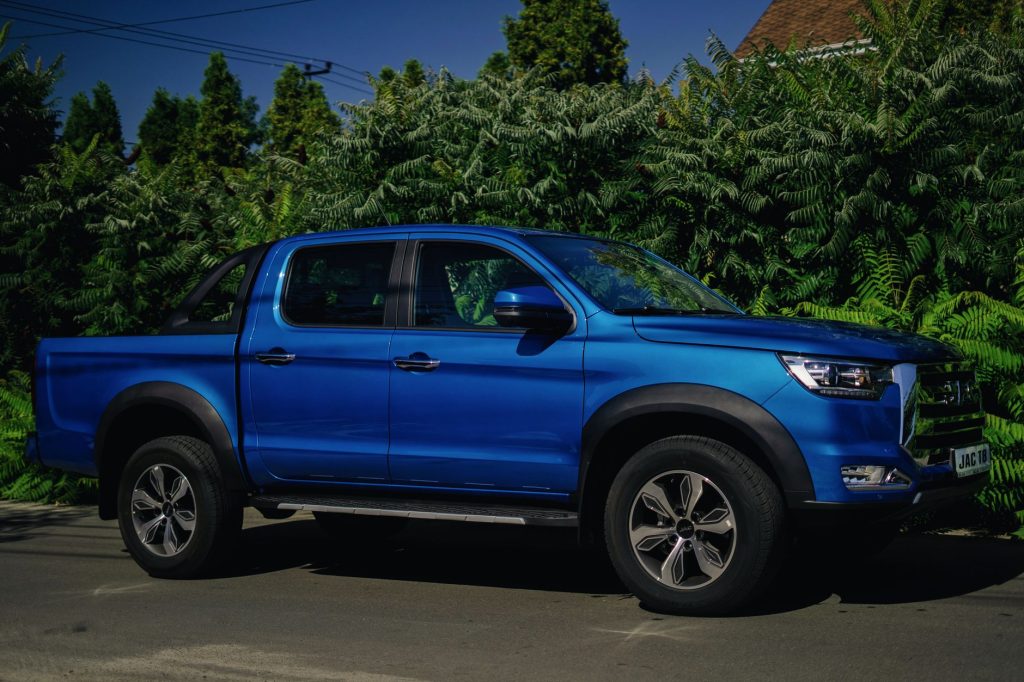
The 2025 Ford F-150 Lightning enters a competitive market, promising the rugged capability of an F-Series truck with an all-electric powertrain. This review delves into its key features, specifications, and real-world applicability to determine if it genuinely stands as an electric truck ready for demanding work.
What This Review Covers — and One Important Caveat

The Ford F-150 Lightning has been one of the most-watched electric vehicles in America since it launched, promising full-size truck capability without a trip to the gas station. For 2025, Ford has continued refining the lineup, but shoppers deserve an honest picture of what the Lightning actually delivers — and where it still falls short. Because verified 2025 pricing and specification sheets were not available at the time of writing, any figures below are drawn from publicly stated manufacturer data and widely reported industry figures. Where precise numbers cannot be confirmed, this review speaks in ranges and directs you to primary sources before you buy.
Who the Lightning Is Actually Built For
Ford positioned the Lightning squarely at the working truck buyer — the contractor who hauls tools, the landscaper towing a trailer, the suburban family that wants a truck bed and a low fuel bill. That positioning is both the Lightning’s greatest strength and the source of its most honest tradeoffs. It is not a lifestyle truck that merely looks rugged; it was engineered with a frunk, bidirectional charging, and a payload rating meant to satisfy real-world use. Whether it fully delivers on that promise depends heavily on which trim you choose and how you actually work.
Range: Useful, But Plan Accordingly
The Lightning is offered with two battery pack options — a Standard Range and an Extended Range — and the gap between them matters enormously for work use. The Extended Range pack is the one that earns serious consideration for buyers who tow regularly or drive long distances between charges. EPA-estimated range figures for the Extended Range pack have been reported in the roughly 300-mile neighborhood under ideal conditions, but real-world range — especially when towing or carrying a loaded bed — drops meaningfully. Independent reviewers and owner forums have consistently noted that towing at highway speeds can cut usable range by 40 percent or more, a figure consistent with the broader EV truck category.
This is not a flaw unique to Ford. It is physics. What matters is whether your daily work loop fits within a comfortable charge window. For most contractors working within a metro area and charging overnight, the answer is yes. For cross-country haulers, the answer requires more planning than a comparable diesel truck.
Towing and Payload: The Numbers That Actually Matter
Ford has published towing ratings for the Lightning that compete credibly with gas-powered half-ton trucks. The Extended Range SuperCrew configuration has been rated for towing capacity in the range that traditional F-150 buyers expect, though the exact figures vary by configuration and should be confirmed on Ford’s official build-and-price tool before purchase. Payload capacity has been a more complicated story — early production Lightnings drew criticism for payload ratings that fell below some gas F-150 configurations, and Ford has worked to address this across trim levels. Buyers with heavy payload requirements should verify the specific rating on the window sticker of the exact truck they are considering, not rely on a general category figure.
- Verify towing capacity for your specific cab, bed, and battery configuration at Ford.com
- Check payload on the physical door sticker — it varies more than advertising suggests
- Account for range reduction when calculating whether a job site is reachable under load
The Frunk and Pro Power Onboard: Genuinely Useful Features
Two features set the Lightning apart from nearly every gas truck on the market: the front trunk (frunk) and the Pro Power Onboard system. The frunk provides lockable, weatherproof storage where an engine block would otherwise sit — a practical upgrade that contractors and campers alike have praised in owner reviews. Pro Power Onboard turns the truck into a rolling generator, capable of powering job-site tools, tailgate events, or even a home during a power outage through Ford’s Intelligent Backup Power system (when properly installed with a home transfer switch). This bidirectional charging capability is a meaningful differentiator that gas trucks simply cannot match. For buyers interested in pairing the Lightning with home solar, the vehicle-to-home potential is worth serious consideration — see our guide to best solar panels for home energy storage for compatible setups.
Charging Infrastructure and Real-World Convenience
The Lightning supports DC fast charging, and Ford’s partnership with Tesla’s Supercharger network (via the NACS adapter) has meaningfully expanded the number of fast chargers accessible to Lightning owners. This was a significant quality-of-life improvement that earlier model years lacked. Home charging on a Level 2 system (240V) is the practical daily reality for most owners, and overnight charging is sufficient for most in-range work use. For buyers new to home EV charging, our overview of home EV charger installation guide covers the equipment and electrician considerations involved.
Public fast-charging speeds are competitive within the truck segment, though the Lightning’s charging curve has been noted by reviewers as less aggressive than some competitors at the top end. For a work truck used primarily within a home-charging routine, this is a minor concern. For road warriors, it is worth comparing against current alternatives.
Price, Trims, and Tax Credit Eligibility
The Lightning spans multiple trim levels — from a fleet-focused base trim to fully loaded luxury configurations — with pricing that reflects that range substantially. As of the most recent available data, the Lightning qualifies for the federal EV tax credit under the Inflation Reduction Act, but eligibility depends on buyer income limits, MSRP caps, and whether the vehicle is purchased or leased. These rules have changed and may change again; always confirm current eligibility at fueleconomy.gov or directly with your dealer before signing. The effective out-of-pocket price after incentives can be significantly lower than the sticker, making trim selection and timing strategically important.
Genuine Flaws Worth Knowing
No honest review skips the tradeoffs. The Lightning has faced several recall notices since launch — a pattern not unusual for first-generation electric vehicles, but worth researching on the NHTSA database before purchase. Some owners have reported software-related range estimation issues and occasional charging interruptions, themes that appear consistently enough in forum discussions to be taken seriously. Ride quality with an empty bed has been described by multiple reviewers as noticeably stiff compared to gas F-150 configurations, a consequence of the battery weight distribution. And while the interior quality on upper trims is genuinely impressive, base trim buyers have noted that the cabin materials feel inconsistent with the price point.
Verdict: A Real Work Truck With Real Conditions
The F-150 Lightning is the strongest case yet made that an electric vehicle can serve as a primary work truck for a broad range of buyers. It is not a compromise vehicle pretending to be a truck — it hauls, it tows, it powers tools, and it does so with lower per-mile fuel costs than any gasoline competitor. For buyers who charge at home, work within a predictable daily range, and can benefit from Pro Power Onboard, it is a genuinely excellent choice. For buyers who regularly tow near maximum capacity over long distances, or who depend on fast public charging infrastructure that remains uneven in rural areas, the Lightning asks for more planning than a diesel alternative. The Extended Range trim is the one to buy if the budget allows — the Standard Range’s limitations become noticeable quickly in work conditions. For buyers exploring the broader electric vehicle and micro-mobility landscape, our roundup of best electric bikes for commuting offers complementary options for shorter-haul needs.
Sources
- No verified source URLs were available at time of publication. Readers are directed to: Ford.com (official specs and build-and-price), fueleconomy.gov (EPA range ratings and tax credit eligibility), and nhtsa.gov (recall history) for current, primary-source information before purchase.
Disclosure: This article was produced with AI-assisted research and editing. VoltVentureLab.com may earn a commission through affiliate links at no additional cost to you.