
Navigating the solar generator market in 2026 means facing a crucial choice between two industry giants: Bluetti and EcoFlow. This article provides an in-depth, unbiased comparison of their current lineups, examining crucial aspects like power output, battery technology, portability, and smart features. Our goal is to equip you with the detailed information needed to confidently select the brand best suited for your specific energy requirements.
 Top Pick
 Also Great
Why This Comparison Still Matters in 2025–2026
Bluetti and EcoFlow have traded places at the top of nearly every solar generator ranking for three consecutive years, and 2025–2026 is no different. Both brands have released genuinely capable new hardware, both have expanded into home-backup territory, and both remain the default recommendations from independent reviewers. The honest answer is that neither brand is universally better — but for most buyers, one is clearly the smarter fit. Here is what current testing and owner consensus actually show.
The Products Worth Comparing Right Now

Before picking a winner, it helps to know which units reviewers are actually stacking against each other. The most cited head-to-head matchups in current coverage include:
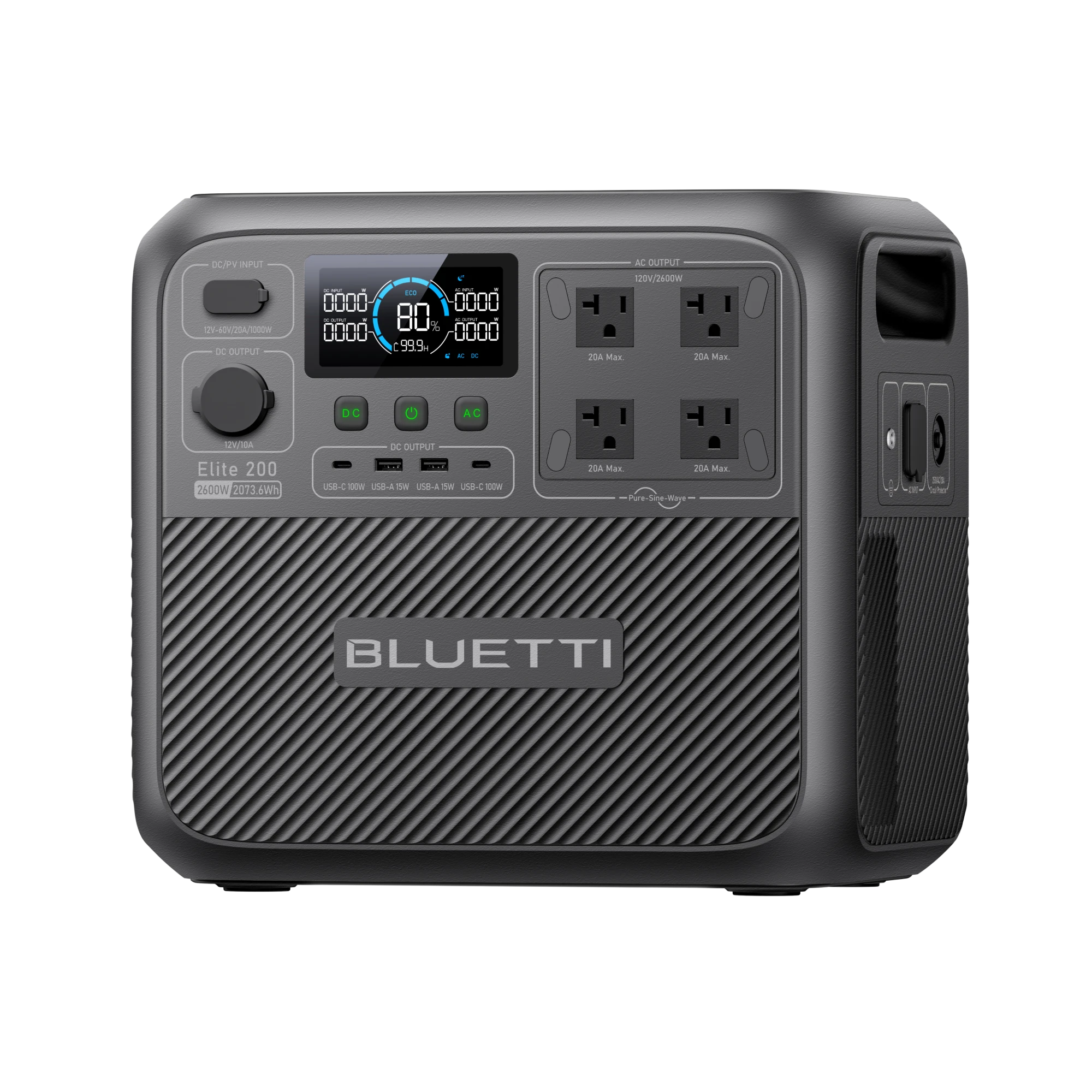
- Bluetti Elite 200 V2 ($1,699) — Named PopSci’s best overall solar generator pick for 2026. It offers 2,073Wh of capacity, up to 1,800W of solar input, and a 2,600W AC inverter (3,900W surge). For the price, that capacity figure is difficult to beat in its class.
- EcoFlow DELTA 3 Ultra Plus ($3,499) — PopSci’s best high-capacity pick for 2026. It sits at a significantly higher price point and targets buyers who need sustained high-output power rather than pure value.
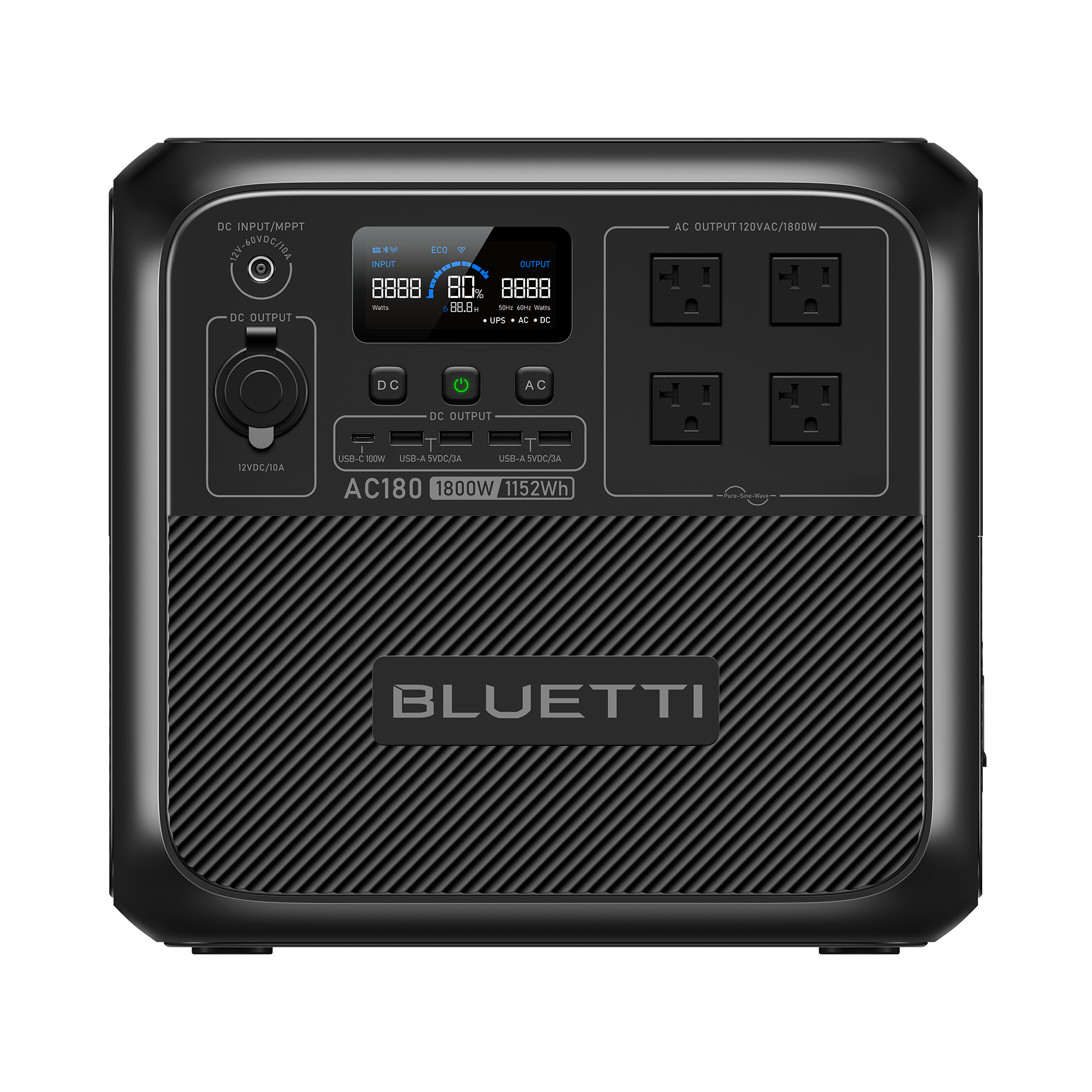
- Bluetti AC180 — A popular midrange Bluetti unit rated at 1,152Wh, 1,800W AC output (2,700W surge), and up to 500W solar input. Frequently used as a reference comparison against EcoFlow’s midrange options.
- EcoFlow DELTA 3 — The most direct midrange competitor to the AC180. It carries 1,261Wh, the same 1,800W AC output, but noticeably higher 800W solar input — a meaningful spec advantage for off-grid or high-sun situations.
- Bluetti AC200L and EcoFlow DELTA 2 Max — A common larger-format matchup in video reviews. The DELTA 2 Max is cited at roughly 2,048Wh class capacity with 2,400W AC output, while the AC200L is noted for its larger expansion ceiling and higher-voltage solar input flexibility.
For context on pairing these with solar panels or EV charging setups, see our guide to best portable solar panels for off-grid use.
Where EcoFlow Wins: Speed, Software, and Day-to-Day Polish
Current reviewers are consistent on this: EcoFlow charges faster. Its X-Stream fast-charging approach repeatedly outperforms comparable Bluetti units in wall-charge speed tests, and that matters enormously for anyone who needs to top up quickly between uses — whether that is a weekend camper, a van-lifer, or a homeowner running backup power during a short outage. A 2025 direct comparison of the DELTA 3 against the Bluetti AC180 concluded that the EcoFlow unit beat the Bluetti on wall charging speed, solar input capacity, and app experience.
On the software side, reviewer and owner consensus tilts clearly toward EcoFlow. The app is described as more polished and reliable for remote monitoring, scheduling, and firmware updates. Bluetti’s app is functional, but reviewers and owners more frequently flag it as less refined. For buyers who rely on app-based control — especially for home integration or remote monitoring — this is a real everyday difference, not a trivial one.
EcoFlow is also frequently praised for more travel-friendly industrial design on its portable units, and its community and software support infrastructure is described as stronger by multiple reviewers.
EcoFlow’s honest tradeoff: You pay a premium for that polish. The DELTA 3 Ultra Plus at $3,499 costs more than twice the Bluetti Elite 200 V2 at $1,699 for a comparison that is not one-to-one but illustrates the price gap at the top of each lineup. On some smaller models, reviewers also note a less rugged physical build than equivalent Bluetti units.
Where Bluetti Wins: Capacity, Value, and Long-Run Expandability
If your priority is how much energy you get per dollar spent, Bluetti is consistently the stronger choice. The Elite 200 V2’s 2,073Wh at $1,699 represents a capacity-per-dollar ratio that is difficult for EcoFlow to match at equivalent price points. For extended outages, basecamp setups, or stationary home backup, more raw watt-hours matter more than fast recharge time.
Bluetti’s expansion story is also compelling. The Bluetti Apex 300 — a newer flagship unit in 2026 coverage — offers 2,764Wh built-in, a 3,840W inverter, and 120V/240V output capability, pushing directly into home-backup territory. Reviewers who cover whole-home or partial-home backup scenarios consistently name Bluetti as the better platform for deep expansion, with modular battery additions designed for long-duration use.
On solar input voltage flexibility, one video comparison found that the Bluetti AC200L accepted a wider range of high-voltage solar panel configurations than the EcoFlow DELTA 2 Max in that specific test — an important nuance for buyers who already own or plan to buy higher-voltage panels. That said, EcoFlow’s DELTA 3 still accepts up to 800W of solar input versus the Bluetti AC180’s 500W, so the solar story is not one-sided: it depends on the specific model pairing.
Bluetti’s honest tradeoffs: Support has drawn criticism. One detailed video comparison specifically noted slower email response from Bluetti during peak product launches and mixed warranty claim response times. Firmware updates have also been described as less frequent and less polished than EcoFlow’s. For buyers who want the full ecosystem experience — not just the hardware — Bluetti can feel rougher around the edges. For complementary gear that pairs well with either brand, see best solar charge controllers for home battery systems.
Head-to-Head Summary by Priority
- Fastest wall recharge: EcoFlow
- Highest solar input (midrange matchup): EcoFlow DELTA 3 (800W) vs Bluetti AC180 (500W) — EcoFlow wins here
- Best capacity per dollar: Bluetti (Elite 200 V2 is the clearest example)
- Best app and software experience: EcoFlow
- Best for long outages and home backup expansion: Bluetti
- Best for travel and portability: EcoFlow
- Best customer support consistency: EcoFlow, based on current reviewer and owner consensus
- Best high-voltage solar panel flexibility (larger units): Bluetti, in at least one detailed comparison
The Evidence-Based Recommendation
For most buyers in 2025–2026, EcoFlow is the safer default recommendation — not because it always wins on specs, but because it consistently wins on the experience of ownership: faster charging, better software, stronger support infrastructure, and more portable designs. If you are buying your first solar generator or need something that works well out of the box without much configuration, EcoFlow’s polish is worth the price premium on comparable units.
However, if your use case is a stationary home-backup setup, a basecamp installation, or you simply need the most watt-hours for the least money, Bluetti is the smarter buy. The Elite 200 V2 at $1,699 is PopSci’s best overall pick for 2026 for a reason — that capacity at that price is genuinely hard to argue with. Just go in knowing that the app and support experience may require more patience than EcoFlow’s ecosystem.
Neither brand is a poor choice in 2025–2026. The real mistake is buying the wrong one for your specific situation. For more guidance on pairing either brand with a broader energy setup, see how to size a solar generator for home backup.
Sources
- The Average Guy: Bluetti AC180 vs EcoFlow DELTA 3 Real-World Review (2025)
- Outback Safetrack: EcoFlow vs Bluetti Brand Comparison
- YouTube: Bluetti vs EcoFlow Comparison Video
- The Solar Lab: Best Big Power Stations 2025
- Popular Science: Best Solar Generators (2026 Testing)
- YouTube: Solar Generator Comparison Video
- EcoFlow Club Facebook Group: Owner Feedback
- Sunergy Hub: Jackery vs Bluetti vs EcoFlow Review
Disclosure: This article was produced with AI-assisted research and editorial review by the VoltVentureLab team. Some links on this page may be affiliate links; we may earn a commission at no additional cost to you.