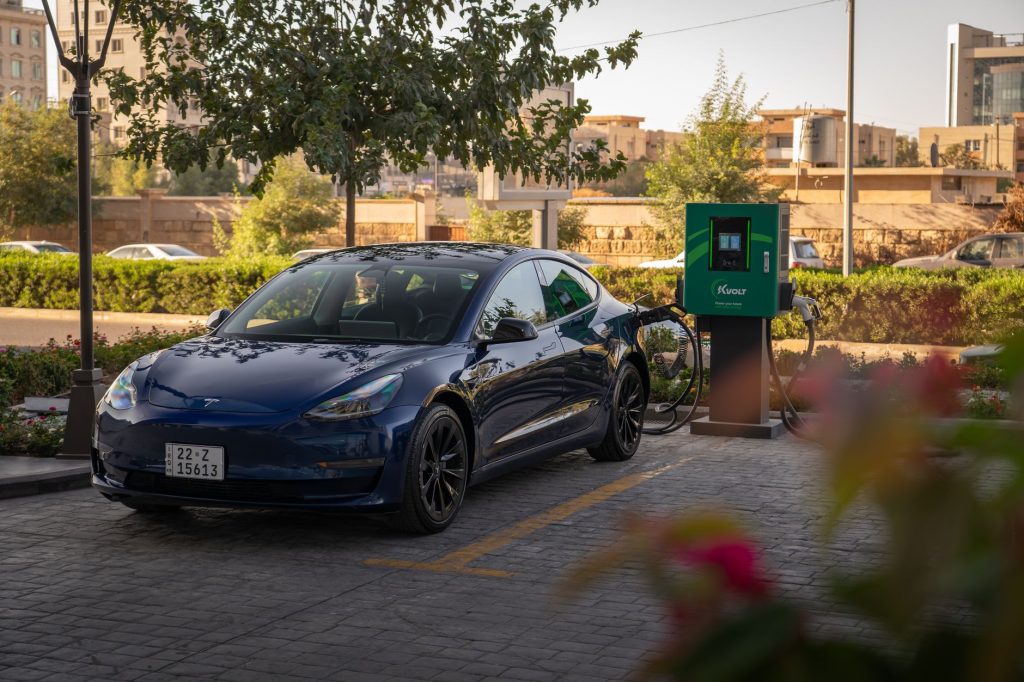
Selecting an electric car in 2026 involves navigating a rapidly evolving market with diverse technologies and models. This guide aims to simplify that complexity by providing a structured framework for evaluating key considerations relevant to your purchase. It will cover essential aspects, from battery performance and range to charging options and ownership costs, enabling an informed decision.
Why 2025 Is a Pivotal Year to Buy an Electric Car

The electric vehicle market has matured significantly, but 2025 brings a specific urgency that no serious buyer should ignore: the $7,500 federal tax credit for new EVs is set to expire after September 30, 2025. That deadline, combined with a rapidly standardizing charging network and a used-EV market finally hitting its stride, makes this one of the most consequential windows in the history of EV buying. This guide cuts through the marketing noise and gives you the framework to make a confident, well-researched decision.
Step 1: Understand What Range You Actually Need

Range anxiety remains the most cited barrier among prospective EV buyers, but the data suggests it is increasingly overstated for most drivers. Here is how to match EPA range ratings to your real-world lifestyle:
- Daily commuters and city drivers: A rated range of 150–200 miles is genuinely sufficient. The vast majority of American commutes fall well under 50 miles per day.
- Suburban and mixed-use drivers: Target 200–250 miles of EPA-rated range for comfortable margin without obsessing over every charge.
- Frequent road trippers: Aim for 250+ miles. High-end options like the Lucid Air (rated up to 516 miles) and the Tesla Model 3 Long Range (335 miles) make long-distance travel genuinely routine.
One important caveat: EPA range estimates are measured under controlled conditions. Real-world range can fall short depending on highway speeds, cold weather, and climate control use. Factor in a 10–20% buffer when evaluating any model’s published range figures.
For buyers exploring lower-speed electric transportation as a complement to a car, our best electric bikes guide covers practical alternatives for short urban trips.
Step 2: Know the Models Worth Considering in 2025–2026
The following models represent the most credible options across different budgets, based on current pricing and verified performance data:
- Chevrolet Bolt EV ($26,500–$30,000 new/used): The most affordable entry point in the new and near-new market. Efficient, practical for city and suburban driving, and carries one of the strongest value arguments in the segment. A legitimate best-buy for budget-conscious shoppers.
- Nissan Leaf — 2020 and newer ($20,000–$28,000 used): The most accessible used option, with meaningful battery improvements in later model years. Battery longevity on older Leafs was a documented concern; stick to 2020 or newer trims to benefit from updated chemistry and better real-world durability.
- Hyundai Kona Electric ($34,500–$42,000): Punches well above its price in terms of range and build quality. A strong pick for compact SUV buyers who want practicality without a premium price tag.
- Tesla Model 3 Rear-Wheel Drive ($38,990–$42,990): The benchmark in the mid-range segment. It offers class-leading range (335 miles), access to the largest fast-charging network in North America, and strong long-term software support. It is the closest thing the segment has to a clear overall winner — but the minimalist interior and software-dependent controls are genuine tradeoffs that divide owners.
- Kia Niro EV ($40,500–$46,000): A well-rounded crossover with a comfortable, family-friendly cabin. Slightly more expensive than the Kona EV but offers more interior space.
- Lucid Air ($100,000–$170,000+): The undisputed range leader at up to 516 miles per charge. Built for buyers who want maximum capability and are willing to pay a luxury premium. Not a realistic option for most buyers, but it sets the technical ceiling for what the category can deliver.
Step 3: Understand the Charging Landscape Before You Buy
Charging compatibility has been one of the most confusing aspects of EV ownership, but 2025 marks a genuine simplification. Most major manufacturers — including Ford, GM, Hyundai, Kia, and Rivian — have adopted the NACS (North American Charging Standard), which means their newer vehicles can plug directly into Tesla Superchargers without an adapter. This is a significant practical advantage, as Tesla’s Supercharger network remains the most reliable and widely distributed fast-charging infrastructure in the US.
If you are considering an older model with a legacy CCS2 port, verify adapter availability and factor in the additional friction of multi-network charging before purchasing. For used-EV buyers especially, this is a detail worth confirming before signing anything.
If you are also exploring home solar to offset charging costs, our solar panels for home charging guide walks through the practical math of pairing rooftop solar with an EV.
Step 4: Act on the Federal Tax Credit — or Lose It
This is the single most time-sensitive factor in 2025 EV buying. The $7,500 federal tax credit for new EVs expires after September 30, 2025. Key eligibility rules to understand:
- MSRP caps apply: SUVs and trucks must be priced under $80,000; cars and sedans must be under $55,000.
- Assembly location matters: The vehicle must be assembled in North America to qualify.
- Income limits apply to purchases: High-income buyers are ineligible for the credit on direct purchases. However, leasing sidesteps the income cap — the leasing company claims the credit and typically passes savings to the consumer through reduced monthly payments.
- Used EVs have separate state-level incentives: The federal credit applies to new purchases, but many US states now offer their own tax incentives specifically for used EVs. Check your state’s energy or DMV website for current programs.
If you are on the fence between new and used, the federal credit deadline may be the deciding factor. A $7,500 discount is substantial and changes the total cost math meaningfully.
Step 5: Evaluate Total Cost of Ownership, Not Just Sticker Price
EVs typically carry a higher purchase price than comparable gas vehicles — often 20–40% more upfront. But the total cost picture shifts over time. Electricity costs consistently run well below annual gasoline budgets for equivalent mileage, and EV maintenance is structurally simpler: no oil changes, no transmission fluid, fewer brake replacements due to regenerative braking.
That said, battery replacement costs remain a real long-term consideration for used buyers. Always request a battery health report before purchasing a used EV. Most manufacturers offer an 8-year/100,000-mile battery warranty on new vehicles — verify whether that warranty is transferable if you are buying used.
The Honest Tradeoffs: What Owners Actually Complain About
Consumer Reports data indicates that EVs and plug-in hybrids report roughly 80% more problems on average than comparable gas-only vehicles. These issues are largely concentrated in software systems, charging components, and other technology-heavy features that are newer and less proven than traditional drivetrain components. This is not a reason to avoid EVs, but it is a reason to prioritize models with strong manufacturer support and established service networks.
Additionally, charging infrastructure outside major metro areas and the Tesla network can still be inconsistent. If you regularly travel through rural corridors, map your common routes against available fast-charger locations before committing to a specific model.
The Bottom Line: Our Evidence-Based Recommendation
For most buyers in 2025, the Tesla Model 3 (RWD) is the most defensible all-around choice at its price point — strong range, the best charging network in North America, and solid long-term software support. Its genuine flaw is an interior that strips away physical controls in favor of a touchscreen-dependent interface; this is a real usability concern for some drivers, not just an aesthetic preference.
For buyers on a tighter budget, the Chevrolet Bolt EV offers the strongest value proposition in the under-$30,000 range. And if the federal tax credit is still available when you read this, act before the September 30, 2025 deadline — that $7,500 changes the calculation for nearly every model on this list.
For used-EV shoppers, a 2020-or-newer Nissan Leaf or Bolt with a verified battery health report and remaining warranty coverage represents a genuinely practical entry into EV ownership without a new-car price tag. Check your state’s used EV incentives — they may surprise you. EV charging gear and accessories
Sources
- Speedway Media — The Smart Buyer’s Guide to Used Electric Cars in 2025
- Powy Energy — Electric Car Guide 2025
- Car and Driver — New Electric Vehicle Buyer’s Guide
- Good Car Bad Car — Best Electric Vehicles for 2025
- Consumer Reports — Hybrid & EV Buying Guide
- Kelley Blue Book — Electric Vehicle Buying Guide
Disclosure: This article was produced with AI-assisted research and editorial review. VoltVentureLab.com may earn a commission through affiliate links at no additional cost to you.