
E-bike batteries represent a substantial investment, making correct charging practices essential for maximizing their longevity. Adhering to specific guidelines can significantly extend your battery’s useful life and maintain optimal performance over time. This article explores seven key rules designed to help you charge your e-bike battery correctly, ensuring you get the most out of your power source.
Why Charging Habits Matter More Than You Think

The battery is the single most expensive component on any e-bike, often representing 30–50% of the total purchase price. Yet most premature battery failures traced back by owners and technicians aren’t caused by defective cells — they’re caused by avoidable charging mistakes made over hundreds of small cycles. The seven rules below are drawn directly from manufacturer guidance, battery system specialists, and owner-consensus sources. Follow them consistently and you can meaningfully extend the usable lifespan of your pack. Skip them and you may find yourself shopping for a replacement battery far sooner than expected. If you’re still choosing your first bike, see our guide to the best electric bikes“>best electric bikes for a breakdown of which models pair strong range with quality battery management systems.
Rule 1: Charge to About 80% for Everyday Riding
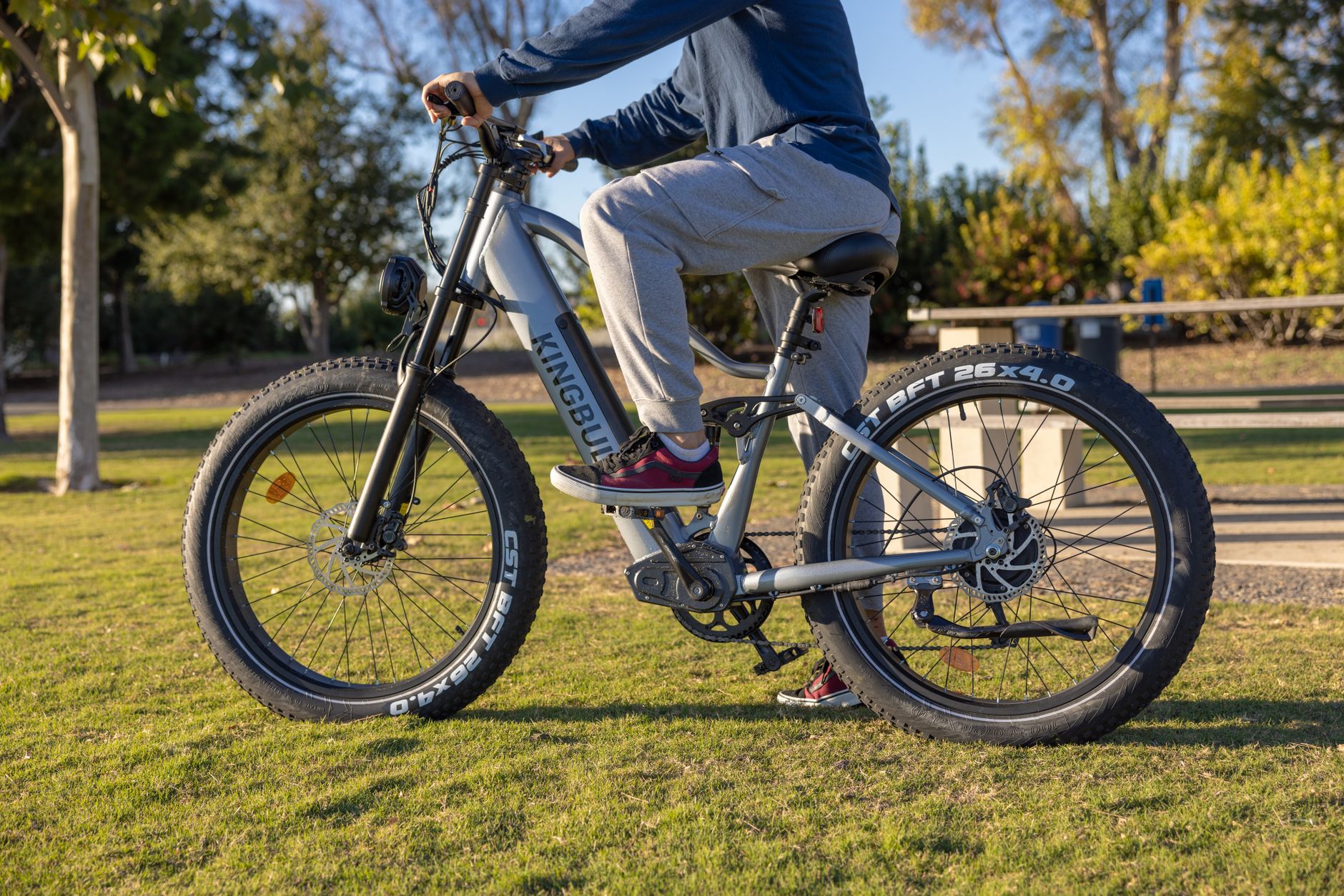
This is the single highest-impact habit change most e-bike owners can make. Both EM3ev and EM Battery Systems explicitly describe targeting a mid-range charge level — roughly 80% — as better for long-term cell health than repeatedly charging to 100%. Lithium-ion and lithium-polymer cells experience measurably more stress at the top of their voltage range. Charging to full every single day accelerates the gradual capacity loss that makes a battery feel “worn out.”
The practical approach: Use a timer outlet or a charger with a charge-limit setting if your bike’s onboard system doesn’t let you cap the charge level. Reserve 100% charges for days when you actually need maximum range — a long group ride, a loaded commute, or a day trip. For routine 10–20 mile daily use, 80% is almost always sufficient and significantly kinder to your cells.
Genuine tradeoff: If your e-bike’s battery display isn’t well-calibrated, consistently stopping short of 100% can make the percentage readout drift over time. An occasional full charge — perhaps once a month — can help recalibrate the battery management system (BMS) on some models.
Rule 2: Never Leave the Battery at Zero
Deep discharge is one of the fastest ways to permanently damage lithium cells. Multiple sources, including EM3ev’s charging guide and EM Battery Systems, warn specifically against storing a battery in a fully depleted state. If you finish a long ride and the battery indicator is critically low, recharge it promptly — don’t leave it sitting drained overnight or over a weekend. At very low charge states, cells can drop below their minimum safe voltage threshold, a condition from which some cells never fully recover.
Rule 3: Always Use the Manufacturer-Approved Charger
This rule sounds obvious, but it’s violated often enough that it appears repeatedly across every credible source consulted. Your e-bike’s battery has a specific voltage, connector type, and pin polarity. A charger that delivers the wrong voltage — even slightly — or that connects with reversed polarity can damage the BMS, degrade cells, or in worst-case scenarios, create a safety hazard.
If your original charger is lost or damaged, contact the manufacturer or an authorized dealer for a replacement. Do not assume that a charger with the same plug shape is electrically compatible. For a broader look at compatible accessories, see our e-bike accessories guide“>e-bike accessories guide.
Rule 4: Charge at Room Temperature in a Dry, Ventilated Space
Lithium cells are sensitive to temperature extremes in both directions. Charging a battery that is frozen or severely cold-soaked (for example, after being stored in an unheated garage in winter) can cause lithium plating inside the cells — a form of internal damage that reduces capacity and can, over time, create safety risks. Conversely, charging an already-hot battery — one that’s been sitting in direct sun or was just pushed hard on a demanding ride — adds thermal stress on top of chemical stress.
Best practice: Let the battery reach room temperature before plugging in. Charge indoors when possible, in a cool, dry, ventilated area. Several sources also recommend charging on a hard, non-flammable surface rather than on upholstered furniture or carpet, as a basic safety precaution.
Rule 5: Connect the Charger to the Battery Before the Wall Outlet
This is a small procedural habit with a logical basis. The recommended sequence — charger to battery first, then plug into the wall — is cited across multiple guides including EM3ev and Small Town EV. Plugging the charger into the wall first can sometimes cause a small voltage spike at the connector the moment it touches the battery port. Over many cycles, that brief arc can wear the contacts. Connecting battery-first eliminates that variable. It takes no extra time and costs nothing.
Rule 6: Unplug When Charging Is Complete
Modern e-bike chargers and BMS controllers are designed to stop active charging once the battery reaches full capacity, but that doesn’t mean it’s ideal to leave a fully charged battery sitting plugged in indefinitely. Several sources flag prolonged time at 100% state-of-charge as a low-grade stressor on cells. If you charge overnight, consider using a smart outlet with a timer so the charger cuts power at a predictable point. If your routine means the bike sits plugged in for many hours past full charge regularly, this habit is worth changing.
Rule 7: Store Long-Term at a Partial Charge — Roughly 40–70%
If you’re putting the e-bike away for weeks or months — seasonal storage, winter layup, travel — do not store the battery either fully charged or fully depleted. Sources vary slightly on the ideal window: EM3ev, EM Battery Systems, and related guides cite ranges of approximately 40–60%, 50–60%, or 50–70% as appropriate for long-term storage. The consistent message is that mid-range storage is significantly better for cell longevity than storing at either extreme.
Check the stored battery every four to six weeks. If it has self-discharged below roughly 40%, top it back up to the mid-range target. Do not store a battery in a location subject to freezing temperatures or sustained high heat — a climate-controlled interior space is strongly preferred.
A Note on Fast Charging
Fast charging is repeatedly flagged in owner and expert consensus as a genuine tradeoff. Higher charge rates generate more heat, and heat accelerates cell degradation. Use fast charging when you genuinely need a quick turnaround, but don’t make it your default daily method if you have the time to use the standard charger. Your battery will thank you in the form of retained capacity three or four years from now. For charging-compatible bikes and gear, browse our solar and EV gear reviews.
The Bottom Line
Of all seven rules, the evidence most consistently points to routine partial charging (targeting ~80%) combined with avoiding deep discharge as the highest-leverage habits for long battery life. These two practices address the majority of premature capacity loss seen in owner reports and are supported by every substantive source reviewed. The other rules — correct charger, right temperature, proper connection order, timely unplugging, and smart storage — layer on top as a complete care routine that costs nothing extra and requires only a modest adjustment to daily habits. There is no single magic fix, but applied together, these practices represent the current best-practice consensus for lithium e-bike battery longevity.
Sources
- Small Town EV — 6 E-Bike Battery Charging Tips
- EM3ev — Charging Your E-Bike
- EM3ev — E-Bike Battery Charging Guide
- EM Battery Systems — When to Charge Your E-Bike Battery
- Gyroor — How to Charge an E-Bike Battery: A Complete Guide
Disclosure: This article was produced with AI-assisted research and editorial review. VoltVentureLab.com may earn a commission on purchases made through affiliate links at no additional cost to you.