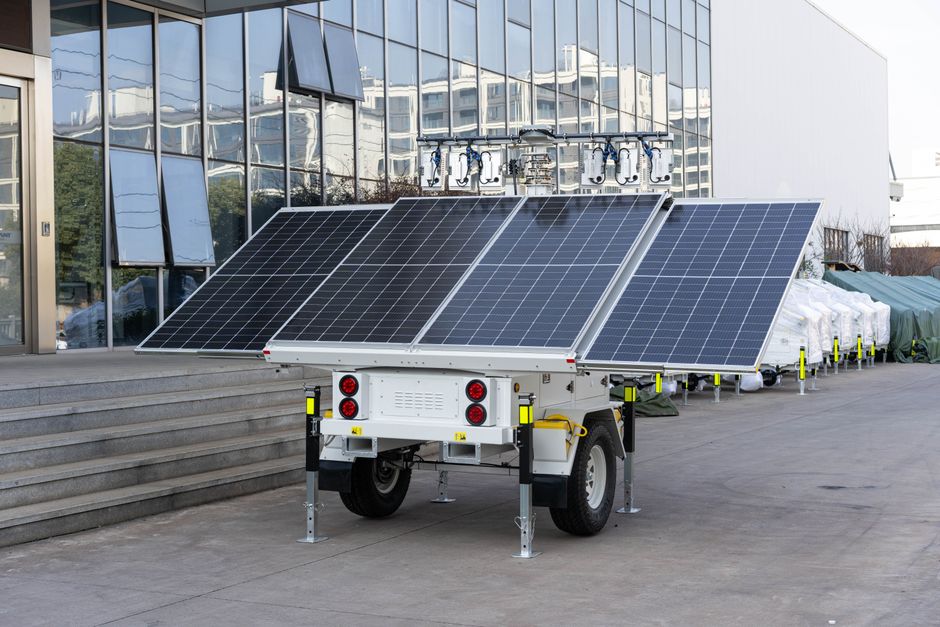
Bluetti Solar Panel Review: Real-World Output, Prices & Honest Tradeoffs (2026)
VoltVentureLab is reader-supported. When you buy through links on this page we may earn a commission. We research using published specs, manufacturer data and owner reports — how we work.
Bluetti has built a loyal following in the portable power space, and its solar panels are a natural companion to its popular power stations. But rated wattage and real-world output are two very different things — and that gap matters when you're sizing a system for van life, off-grid camping, or home backup. This Bluetti solar panel review synthesizes published specs, independent measurements, and owner-reported data to give you an honest picture of what these panels actually deliver in the field. No fabricated test numbers — just sourced evidence.
The Main Bluetti Solar Panels: Specs and 2026 Prices
Bluetti's portable lineup spans roughly 100W to 420W. Here are the key models with current US price context (note that Bluetti discounts heavily and often, so always verify live pricing at bluettipower.com before you buy):
- PV350 (350W): Monocrystalline cells rated at 23.4% efficiency with IP65 weather resistance. Bluetti's own site lists this at $649, though it has appeared as low as $569 during sales events like Prime Day (down from an $819 list) and around $599 from third-party retailers. Expect a typical purchase window of roughly $569–$649.
- SP200L (200W): Listed at $399 on Bluetti's US site. Prime Day pricing dropped it to $329 (from $499), and third-party retailers have listed it around $349. Realistic range: $329–$399.
- PV120D (120W): One third-party retailer (Backuppowerhub) lists this at $209. No additional pricing sources were confirmed at time of writing — verify independently.
- 100W panel: Appeared at $189 during Prime Day sales, down from a $299 list. This is a sale price only; treat the regular price as higher.
- PV420 (420W): No confirmed US retail price was found in current sources. One reviewer noted it typically costs $30–$50 less than a competing panel, but that comparison wasn't specific. Check Bluetti's site directly. Weight is reported at approximately 26.4 lbs (12 kg) by one source.
One retailer blog has mentioned a newer PV350S variant alongside the original PV350, but no official Bluetti confirmation was found. If you're shopping the PV350, confirm which version is currently shipping.
best portable solar panels for camping
Real-World Output: What Independent Tests and Owner Data Show
This is where a Bluetti solar panel review gets genuinely useful — and genuinely complicated. Rated wattage is a lab condition; real-world output depends on sun angle, temperature, cloud cover, and how well you track the sun.
PV350: Measured Performance
The most rigorous independent data point available comes from StorageReview, which measured a peak of 295W from the PV350 under a clear sky with the sun directly overhead — roughly 84% of the 350W rating. Under shallow sun filtered through tree cover, the same panel dropped to just 38W. It's worth noting this test is now approximately 1,100 days old, so it predates recent firmware or hardware revisions. Affiliate-style review sites generally report 280–310W in midday sun, consistent with a 70–85% real-world yield range, though those figures are not lab-verified.
PV420: Stronger Real-World Ratio
The PV420 appears to perform proportionally better against its rating. A reviewer from Off Grid Benchmark tested the panel over three weeks across Utah and Arizona and recorded a peak of 388W — approximately 92% of the 420W rating. That's a notably high real-world conversion for a folding portable panel. The same reviewer noted that the PV420 continues producing meaningful output under light cloud cover, though output fluctuates visibly as shadows pass. Keep in mind the PV420's bulk: concentrating 420W into a single folding unit makes it heavier and less packable than splitting wattage across two smaller panels.
Daily Energy Estimates
One source estimates a PV350 can generate roughly 1,500–2,000Wh per day under good conditions, with the PV420 reaching 2,000–2,500Wh per day. These are estimates tied to location, season, and sun hours — not measured outputs — but they're useful for rough system sizing.
Station Compatibility Is a Hard Limit
A panel can only deliver what a connected station will accept. According to Backuppowerhub, the AC180 has a 500W maximum solar input, while the AC200L and Elite 200 V2 accept up to 900W. Note that another source cites 700W for the AC180 — these figures conflict, so confirm against Bluetti's official spec sheet before pairing panels. Plugging a 420W panel into a station capped at 500W means you'll rarely, if ever, hit the ceiling, but you're also not wasting money if you plan to run two panels in parallel later.
Bluetti vs EcoFlow power stations compared
Owner Feedback: What Buyers Praise and Complain About
Across retailer reviews and community forums, a consistent pattern emerges:
What owners like:
- Plug-and-play pairing with Bluetti stations — no adapters or wiring guesswork, per Backuppowerhub's summary of owner feedback.
- High power density in a single portable unit, particularly valued by van-lifers and overlanders who want one panel rather than a daisy chain.
- The PV420's ability to still produce usable output under overcast skies, even if output swings unpredictably.
Genuine complaints to weigh:
- Underperformance reports: Bikmantech notes anecdotal reports from owners seeing only 150–200W in direct sun from a 350W panel. This is a secondary summary, not a verified sample, but it's consistent enough to mention. If your panel isn't hitting at least 70% of rated output in strong midday sun, something is wrong — check the connection and charge controller input limits.
- Long-term degradation: Some owners report faster-than-expected performance loss over time. This is anecdotal and not independently verified, but worth monitoring if you plan to use a panel heavily for years.
- Weight and bulk of the PV420: At roughly 26 lbs, it's a one-person-carry but not a lightweight hike-in option. If portability is paramount, two SP200L panels may be a more flexible split.
Tariffs, Tax Credits & What to Know Before You Buy in 2026
Two external factors could affect what you pay. First, on federal tax credits: Bluetti's own blog states the federal residential clean energy credit no longer applies to new 2026 expenditures. However, that credit primarily targeted home solar installations, not portable folding panels — confirm your specific situation with the IRS or a tax professional before assuming any credit applies.
Second, on tariffs: As of October 2026, China Section 301 tariffs and anti-dumping/countervailing duties remain in effect. New Section 232 minimum import price rules — reportedly including a $0.38/W floor for modules — are scheduled for December 4, 2026. Whether these apply specifically to finished portable folding panels (as opposed to standard solar modules) hasn't been confirmed in available sources. Price increases are possible; if you're on the fence, buying before December may be prudent, though that is an inference, not a guarantee.
Verdict: Who Should Buy a Bluetti Solar Panel?
Based on the totality of published specs, independent measurements, and owner-reported data, Bluetti's solar panels deliver solid real-world performance — typically 70–92% of rated output depending on model and conditions — with the PV420 showing the most favorable measured ratio in the available evidence. The PV350 is the better-documented choice for most buyers: more independently tested, well-priced in the $569–$649 range, and genuinely portable.
The honest tradeoff: underperformance reports are real and not rare. Some owners see meaningfully less than rated output even in good conditions, and Bluetti's customer support record on this issue isn't extensively documented in available sources. Buy from a retailer with a clear return window.
If you're pairing a panel with a Bluetti power station and want the best value entry point into the ecosystem, the Bluetti AC200P remains a standout anchor. It packs 2,000Wh of LFP capacity — the safest battery chemistry for long-term use — at around $999, making it one of the most cost-effective large-capacity stations in the market. It's become a go-to for van life builds for good reason: reliable, proven, and compatible with the full Bluetti panel lineup.
→ Compare the Bluetti AC200P and see if it's right for your setup — full breakdown here
how to size a portable solar system for camping
Sources
- StorageReview – Bluetti PV350 Solar Panel Review
- Off Grid Benchmark – Bluetti PV420 Review
- Solar Go Gear – Bluetti PV350 Review
- Backup Power Hub – Bluetti 350W Solar Panel Review
- RV Outfitting – Bluetti 350W RV Solar Panel Review
- Backup Power Hub – Bluetti Solar Panels Overview
- True Gear – Are Bluetti Solar Panels Worth It?
- Off Grid Power Boom – Bluetti PV420 420W Solar Panel
FTC Disclosure: This article was produced with AI-assisted research and contains affiliate links. VoltVentureLab.com may earn a commission on purchases made through those links at no additional cost to you. All prices and specs should be verified directly with retailers before purchase.
Products to compare
Affiliate links — we may earn a commission if you buy, at no extra cost to you. Prices change; check the current price.
Get the honest weekly roundup
One short email a week: real prices, new e-bike and backup-power deals, and what's actually worth buying. No spam.